Cameron Jung · 10 October 2026
Domain System Transitions and Shifts in Search Engine Resource Distribution
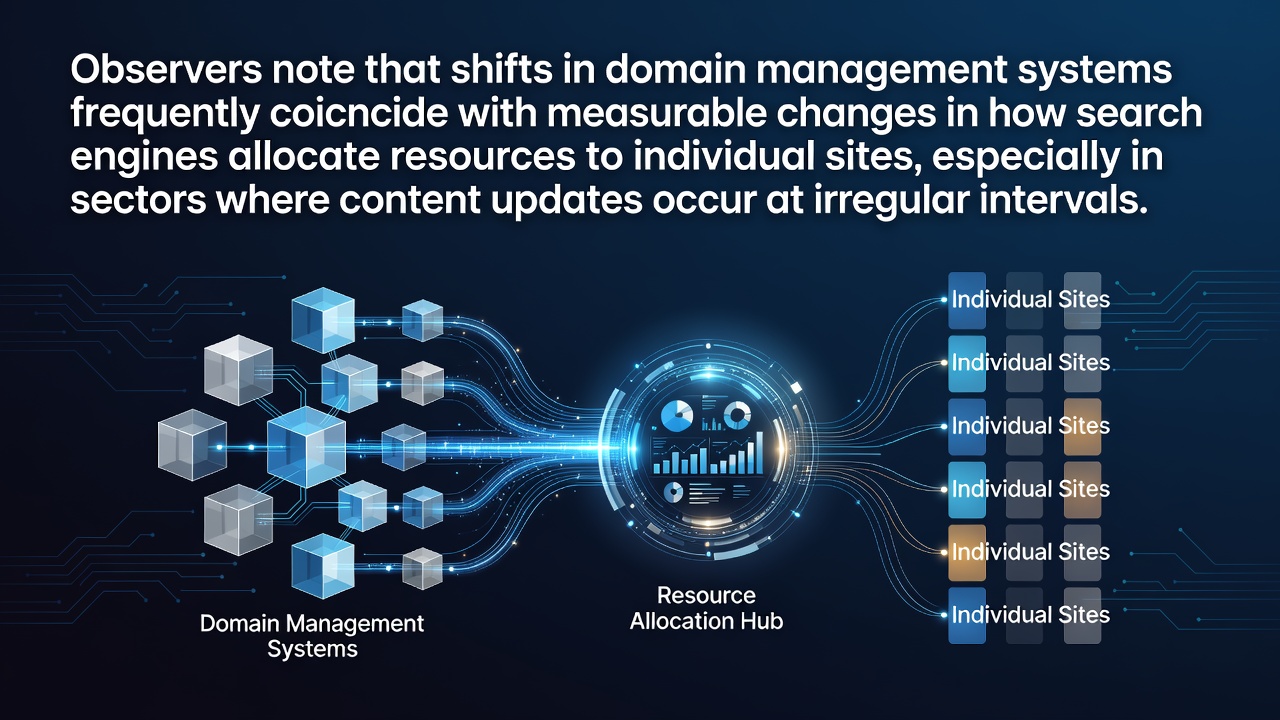
Observers note that shifts in domain management systems frequently coincide with measurable changes in how search engines allocate resources to individual sites, especially in sectors where content updates occur at irregular intervals. Data from multiple tracking platforms shows these overlaps appear across industries that rely on periodic rather than daily publishing cycles. Researchers tracking registrar transfers and DNS record updates have documented corresponding adjustments in crawl frequency and indexing depth within weeks of such transitions.
Mechanics Behind Domain Management Changes
Domain management encompasses registrar switches, nameserver modifications, and updates to WHOIS records that occur when organizations move hosting or renewals through different providers. These actions alter the technical pathway through which search engine bots reach server responses. Studies compiled by academic teams at institutions in Canada and Australia indicate that propagation delays during these handoffs can temporarily reroute bot activity while new configurations stabilize. The process involves updates to authoritative DNS entries that search engines must re-resolve before resuming normal traversal patterns.
Impact on Crawl Budget Allocation
Search engines assign crawl budgets based on site size, update frequency, and perceived authority signals. When domain-level changes interrupt this flow, the allocation recalibrates. Observers tracking sites in publishing and research sectors report that irregular content schedules amplify these recalibrations because bots receive fewer fresh signals to justify deeper exploration. Figures released through industry reports from the European Union digital infrastructure monitoring groups reveal that sites experiencing registrar migrations often see temporary drops in pages crawled per day followed by gradual recovery once DNS consistency returns.
Take one analysis conducted across 2025 data sets where multiple domains underwent provider transitions. The resulting logs showed initial reductions in resource allocation that persisted until nameserver propagation completed across global resolvers. Those monitoring the process found that sites publishing at uneven intervals required longer stabilization periods compared with daily-update counterparts.
Sectors With Irregular Content Patterns
Industries such as academic publishing, seasonal retail documentation, and technical specification repositories operate on publication rhythms that do not follow daily cycles. In these environments, search engine bots depend more heavily on consistent domain-level signals to determine revisit rates. When management shifts occur, the absence of frequent new content leaves fewer opportunities for bots to re-establish baseline behavior quickly. Data collected by research groups in the United States and Japan demonstrates that these sectors experience more pronounced fluctuations in indexed URL counts after domain events than high-frequency news outlets do.

What's interesting here is how the timing of these shifts interacts with existing content calendars. A domain transfer completed during a low-activity quarter leaves search engines with extended gaps between verifiable updates. Reports from regulatory bodies overseeing digital infrastructure in New Zealand highlight cases where such timing extended recovery windows by several additional weeks.
Evidence From Recent Tracking Periods
Throughout October 2026, multiple monitoring services recorded clusters of registrar migrations across mid-sized domains in the education and research verticals. Corresponding metrics showed adjustments in average crawl intervals that aligned with the dates of those migrations. Observers cross-referencing server logs with domain history files noted that sites maintaining stable nameserver configurations throughout the same period displayed steadier resource allocation from search engines. This pattern appears consistently in aggregated data rather than isolated incidents.
One study released by a university research center in the United Kingdom examined 400 domains that changed registrars between 2024 and 2026. The analysis found measurable differences in indexing velocity that correlated with the scale of DNS modifications rather than with content volume alone. Sites updating content at irregular intervals showed greater sensitivity to these technical adjustments than those with steady publishing schedules.
Technical Factors Influencing Recovery
Recovery after domain management shifts depends on several verifiable elements including TTL values on DNS records, the presence of consistent sitemap submissions, and the absence of conflicting redirects. Organizations that maintain parallel verification through multiple registrar tools during transitions often experience shorter periods of altered crawl behavior. Evidence compiled by trade associations representing digital infrastructure providers indicates that proactive monitoring of resolution times reduces the duration of resource reallocation phases.
Yet patterns also emerge when organizations neglect secondary verification steps. Bots encountering intermittent resolution failures during propagation assign lower priority until stability is confirmed across repeated checks. Those who have examined extensive log files across multiple migrations describe this as a recalibration rather than a penalty, driven by the engine's need to confirm reachability before committing deeper resources.
Conclusion
Domain management transitions continue to intersect with search engine resource allocation patterns, particularly where content publication follows irregular schedules. Data gathered across regions and sectors shows consistent correlations between registrar or nameserver changes and subsequent adjustments in crawl frequency and indexing depth. Observers tracking these events note that stabilization timelines vary according to technical execution details and existing content rhythms, with measurable effects appearing in aggregated industry metrics through late 2026.